It Grows in Fields. It’s Been Ignored at Pharmacies. And It Might Be the Most Important Thing Your Heart Has Never Received.
Picture a sprawling meadow.
Purple blossoms swaying in the breeze. Bees circling lazily. Farmers barely giving it a second glance as they pass.
For most of the modern world, Red Clover is background scenery.
But for the physicians of medieval Europe, the herbalists of ancient Asia, and now — quietly, reluctantly — a growing number of cardiovascular researchers?
It’s something else entirely.
It’s a molecule delivery system that targets the exact biological mechanisms driving the world’s number one killer.
And almost nobody is talking about it.
The Cardiovascular Crisis Hiding in Plain Sight
Here’s a number worth sitting with:
Cardiovascular disease kills one person every 33 seconds.
Not annually. Not monthly.
Every. 33. Seconds.
And for decades, the standard conversation has revolved around the same pharmaceutical solutions — statins, blood thinners, beta-blockers — each with their own cascade of side effects that often create new problems while managing the original one.
What that conversation consistently overlooks is the question herbalists have been asking for centuries:
What if the cardiovascular system responds to plants?
Not because plants are trendy.
Because the human body evolved alongside them for 200,000 years before a single synthetic molecule ever existed.
The Purple Field Flower With a Remarkably Complex Chemistry
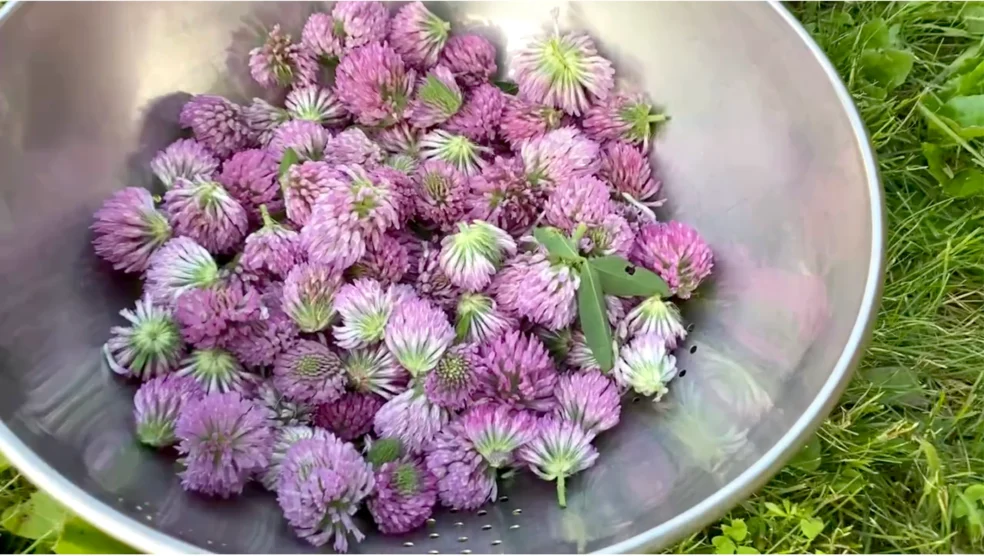
Red Clover Blossoms (Trifolium pratense) aren’t celebrated for their appearance.
They’re celebrated for what’s inside them.
Red Clover contains a dense concentration of isoflavones — plant-based compounds that interact with cardiovascular tissue at a molecular level in ways that have genuinely surprised researchers.
When scientists began seriously investigating red clover blossoms heart health applications, what they found challenged the assumption that botanicals were too simple to address complex cardiovascular function.
The isoflavone profile in Red Clover does something sophisticated:
It works on multiple cardiovascular pathways simultaneously — not just one marker, not just one mechanism.
What Red Clover Blossoms Actually Do Inside Your Cardiovascular System
For anyone researching natural herbs for cardiovascular health, the specific mechanisms matter:
- ❤️ Supports arterial flexibility — isoflavones help maintain the elasticity of arterial walls, reducing the stiffness that raises blood pressure and cardiac strain
- ❤️ Modulates LDL and HDL cholesterol balance — research shows meaningful shifts in lipid profiles with consistent Red Clover use
- ❤️ Reduces systemic inflammation — a primary driver of arterial plaque formation and cardiovascular deterioration
- ❤️ Supports healthy blood viscosity — promoting smoother flow and reducing the clotting risk that underlies many cardiac events
- ❤️ Provides antioxidant protection — shielding cardiovascular tissue from the oxidative damage that accelerates heart disease progression
This is why Red Clover consistently appears at the top of lists of heart protective herbs — not because of tradition alone, but because the biological mechanisms are now understood and documented.
The Compounding Problem With Waiting
Here’s what the research on cardiovascular health makes unmistakably clear:
Heart disease doesn’t announce itself.
It builds — silently, incrementally — across years of small inflammatory insults, gradual arterial changes, and oxidative damage accumulating below the threshold of symptoms.
By the time symptoms appear, the underlying process has often been running for a decade.
This is precisely why the most compelling herbal remedies for heart disease research focuses not on crisis intervention — but on the consistent, daily maintenance of cardiovascular function that prevents the crisis from arriving at all.
Red Clover Blossoms aren’t a treatment.
They’re a conversation your cardiovascular system has been waiting to have.
Your Heart Has Been Working Without Support. It’s Time to Change That.
Every beat is a request.
Red Clover Blossoms — alongside six synergistic botanicals including Hawthorn Berry, Garlic, and Cayenne — answer it.
Always consult your healthcare provider before beginning any herbal supplementation.