Ever heard the term “sticky blood”?
Sounds weird, right?
But it’s a real thing.
And it’s quietly killing people every single day.
See, your blood isn’t supposed to clump together.
It’s supposed to flow smooth and easy through your veins and arteries.
Like water through a garden hose.
But when your blood gets “sticky”…
It starts forming clots where it shouldn’t.
Those clots can block arteries. Cut off oxygen to your brain. Stop your heart.
Doctors call this hypercoagulation.
Normal people call it terrifying.
And the standard medical approach?
Put you on blood thinners for life.
Warfarin. Plavix. Eliquis.
Drugs that come with a laundry list of side effects…
Including the risk of bleeding out from a simple cut.
But here’s what nobody tells you…
There’s a pink flower that grows wild in fields across the world…
That’s been used as a natural anticoagulant herbs remedy for centuries.
It’s called red clover.
And it might be exactly what your blood needs.
What Makes Blood “Sticky” In The First Place
Before we talk about the solution…
Let’s understand the problem.
Your blood contains tiny cells called platelets.
When you get a cut, platelets rush to the scene and stick together…
Forming a clot to stop the bleeding.
That’s GOOD.
But sometimes, platelets get overexcited.
They start clumping together INSIDE your blood vessels…
Even when there’s no injury.
This is called platelet aggregation.
And when it happens too much, you get “sticky blood.”
What causes this?
• High cholesterol
• Inflammation
• Poor diet
• Smoking
• Stress
• Dehydration
• Certain medications
Your blood becomes thick. Sluggish. Prone to clotting.
And that’s when strokes and heart attacks happen.
Western medicine fights this with pharmaceutical blood thinners.
But traditional healers took a different route…
They used herbs.
The Blood-Purifying Power Of Red Clover
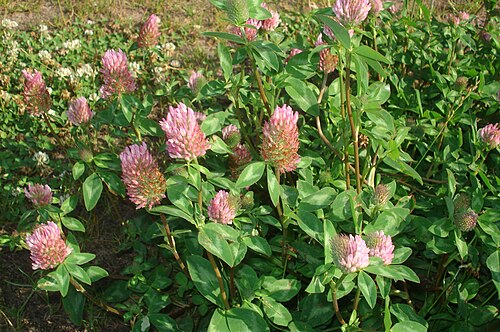
Red clover is one of those plants people walk past every day without a second thought.
It grows in fields, along roadsides, in your backyard.
Those little pink puffball flowers?
Yeah, those.
For centuries, herbalists have called red clover “the blood purifier.”
They observed that people who consumed it regularly…
Had better circulation.
Healthier-looking skin.
More energy.
And fewer heart problems.
What they didn’t know back then…
Is that red clover contains compounds called isoflavones.
These plant chemicals have been studied for their ability to support cardiovascular health.
Specifically, they appear to help prevent blood clots naturally by affecting how platelets behave.
How Red Clover Keeps Your Blood Flowing
Here’s what makes red clover unique as a red clover blood thinner alternative…
It doesn’t just thin your blood like pharmaceutical drugs do.
It works more gently. More intelligently.
Red clover appears to:
Reduce platelet stickiness – The isoflavones in red clover may help discourage excessive red clover platelet aggregation, keeping your blood from clumping when it shouldn’t.
Support healthy vessel walls – Stronger, more elastic blood vessels mean less risk of clots forming in damaged areas.
Act as an antioxidant – Free radicals damage your blood vessels and promote clotting. Red clover’s antioxidants help neutralize these threats.
Improve overall circulation – When blood flows better, it’s less likely to pool and clot in problem areas.
This is why red clover has been traditionally used as part of sticky blood remedies for generations.
Not as a pharmaceutical replacement…
But as a gentle, supportive herb that helps your cardiovascular system function the way it’s supposed to.
Red Clover vs. Prescription Blood Thinners
Let’s be clear about something…
If your doctor has you on blood thinners, don’t just stop taking them and switch to red clover.
That’s dangerous.
But it’s worth understanding the differences:
Prescription blood thinners:
→ Work aggressively to prevent clotting
→ Can cause dangerous bleeding
→ Require constant monitoring
→ Come with numerous side effects
→ Don’t address root causes
Red clover:
→ Works gently to support normal blood flow
→ Has been used safely for centuries
→ Contains beneficial antioxidants
→ May support overall cardiovascular health
→ Addresses inflammation and vessel health
One is a sledgehammer.
The other is a gentle adjustment.
Both have their place.
Who Should Consider Red Clover
Red clover might be worth exploring if you:
• Have a family history of heart disease or stroke
• Want to support healthy circulation naturally
• Are looking for cardiovascular support alongside healthy lifestyle changes
• Have been told your blood is “thick” or you’re at risk for clots
• Want a traditional remedy with centuries of use behind it
Of course, if you’re already on blood thinners or have a clotting disorder…
Talk to your doctor before adding ANY herbs to your routine.
Seriously.
Don’t be stupid about this.
The Plant Your Ancestors Trusted
Red clover isn’t some trendy superfood that’ll be forgotten in five years.
It’s been used across cultures for generations.
European herbalists brewed it as tea.
Native Americans used it in medicinal preparations.
Traditional Chinese Medicine incorporated it into formulas.
Why?
Because it worked.
People noticed their circulation improved.
Their energy increased.
Their risk of “sudden death” decreased.
And now modern research is starting to validate what traditional healers always knew…
This humble pink flower has serious cardiovascular benefits.
Don’t Wait For A Wake-Up Call
Most people don’t think about their blood until something goes wrong.
A stroke. A heart attack. A pulmonary embolism.
By then, you’re in emergency mode.
But what if you could support your cardiovascular system NOW…
Before the wake-up call?
Red clover offers that opportunity.
Not as a miracle cure.
But as a time-tested, gentle way to help keep your blood flowing the way nature intended.
Because your blood should flow like water.
Not sludge.